
 PDF Download
 PubReader
 Export Citation
 Email the Author
 Share Facebook
 Share Twitter
 Cited by 1 Article
 Metrics (View:4,354)







1. Introduction
Fishing and fishing-related activities, including those by commercial and small-scale fishers (SSF), are pivotal towards providing fish and fish products that are highly demanded globally (Lee et al., 2025; Matovu et al., 2024a, 2024b). In 2023, capture fisheries and aquaculture added 223.2 million tons of fish products to the global food table, with 185.4 million tons comprising aquatic animals and 37.8 million tons of algae (FAO, 2024b). More lucrative products, e.g., seaweeds, are now cultured, with demand and market value projected to reach USD 95 billion in 2027 (Sobuj, Rahman, and Ali, 2024). Through this, economies and coastal populations have reaped immense socioeconomic dividends. An estimated 492 million people’s livelihoods and employment needs are satisfied through (in)direct participation in SSF (FAO, 2023). With 89 percent of the harvested fish products consumed by humans, equivalent to a per capita consumption of 20.7 kg in 2022, nutrition and health needs for several populations, e.g., for women and children, are satisfied (FAO, 2024a, 2024b). It is estimated that SSF fish landings alone could potentially cover up to 50 percent of the needed omega-3 fatty acids, and 20 percent of the recommended calcium, selenium, and zinc nutrient intakes for 987 and 477 million women globally (FAO, 2023). Little wonder that SSF, including fisherwomen, pride themselves as active contributors who must be valued and included in collaborative fisheries governance mechanisms steering towards SSF guidelines (FAO, 2023; Matovu et al., 2024a).
Several coastal, inland, and marine fishing nations have attained astronomical fisheries-induced revenues, boosting the national and global gross domestic products and economy. In 2022, for instance, global trade in aquatic products, involving 230+ countries and territories, yielded record revenues of USD 195 billion (FAO, 2024b). These indicators reinforce scholarly and policy narratives that in most coastal countries, fisheries are the fastest-growing sub-sector of the agricultural sector (Suresh et al., 2025) and play an invaluable role in global sustainable development and livelihood transformations (Etta, Matovu, and Lukambagire, 2025; Lee et al., 2025; Spalding et al., 2023). Unfortunately, the lucrative fisheries trade and value have compromised conventional fish value chain (FVC) practices, notably among SSF communities, which might compromise micro-level communities’ livelihoods. Moreover, although global rhetoric for sustainability and blue transformations across fisheries are emphasized, few studies have documented micro-level fishing communities’ perspectives on what or how a sustainable FVC should be or must entail. This study attempts to answer this question and contribute to scholarship by exploring perspectives of diverse SSF actors in Yunlin, Taiwan, and co-developing a sustainable FVC pathway or design. Before switching to this, a conceptual and analytical description of the global FVC landscape is given.
For millennia, fisheries-related economy and businesses operate in formal and informal structures or systems through which various activities and actors operate. Although there is limited consensus on the meaning of FVCs, Lukambagire et al. (2024) shed light on FVC dynamics, especially in micro-level contexts. They argue that FVCs highlight interconnections where actors target a given service or product to satisfy a target customer base or demand-supply pattern. Most often, valuable fisheries products are extruded from the source (fishing ground), traded onsite or offsite, and sold to commercial and non-commercial consumers. This means that FVCs are characterized by linear supply-demand patterns, involving systematic activities, e.g., fish harvesting, processing, trade, and consumption (Siddique et al., 2024; Sobuj, Rahman, and Ali, 2024). The current FVC patterns have created specialized role allocations where diverse stakeholders and players, e.g., primary fishermen, fisherwomen, regulatory entities, and trading companies, operate to ensure sustained production and supply of fish and fish-related products, including seaweeds, and recently, sustainable fishing practices, to the ever-increasing fish-consuming population or markets (FAO, 2024b; Prakash et al., 2017; Sasi, Sarker, and Essam, 2024; Venugopal, 2022).
However, the lucrative micro-level fisheries landscape has attracted commercial fish dealers and huge investments to reap the economic benefits in the sector, which has come along with unfathomable socioecological externalities and trade-offs never seen before, across the FVC (Fabinyi et al., 2022; Fisher et al., 2021). Today, in primary fishing activities, illegal, unreported, and unregulated fishing activities, and increased bycatch, coupled with policy failures, have catapulted into overexploitation of wild fisheries resources (Belhabib, Greer, and Pauly, 2018; Belhabib et al., 2019). As conceded in the FAO (2024b) report, although variations occur across the fifteen FAO-monitored major fishing zones, in 2021, a decline of 62.3 percent of marine fish stocks fished within biologically sustainable levels was reported, increasing fears for fish-food insecurity. With a 19 percent value increase in aquatic animal products between 2019 to 2022, partly due to the demand for fish meal, fish consumers might either pay exorbitant prices or lack fish to eat soon. This is partly because the increase in fishing effort by commercial and distant fishing fleets fragmented fish demand-supply chains and price haggling, yet valuable but less demanded catches are disposed of as bycatch and increased discards, despite efforts to reduce fish waste (FAO, 2024a; Sasi et al., 2024). Additionally, complex global aquatic products trade gymnastics have created acute fragilities, e.g., in aquatic products certifications, and restrictions for fish products sourced from some countries headed to leading global markets (Belhabib et al., 2019), such as the European Union, which imported USD 62.7 billion worth of aquatic animal products in 2022 (FAO, 2024b). This means that FVC linearity accounts for 30 percent of production losses and creates higher, unsustainable environmental footprints (Venugopal, 2022).
Studies emphasize that FVC shifts and the associated trade-offs are slapped onto historically vulnerable fishing zones and disempowered value chain actors, e.g., SSF and women, especially in tropical fishing regions. (Spalding et al., 2023). In most key and lucrative FVC activities, fishermen or male dominance is reported, and with decreasing fish harvest in some regions, men are venturing into activities historically managed by women, such as fish hawking and drying (Matovu et al., 2024b). This is concerning since women and SSFs are the unsung invisible drivers of fisheries activities and livelihoods (Matovu et al., 2024b). Although global and micro-level sustainable fishing guidelines, roadmaps, e.g., the 2021–2030 FAO blue transformation roadmap, and national-level sustainable fishing regulations have been developed (FAO, 2024b), their implementation has remained pedestrian, less implemented, and in some cases, manipulated. This predicament has led to infinite anxiety concerning future fish stock collapse and explosive FVC injustices. A perpetual worry and gap across coastal fishing zones or communities is that critical answers documenting how FVC unsustainability indicators morphed have been uncharted territory in research and policy. This is partly due to (i) fear of reprimand from the well-connected, powerful actors or commercial fishing dealers, (ii) unorganized, multifaceted, and fragmented nature of FVC activities and actors (Prakash et al., 2017), (iii) limited quantitative analyses and understanding of FVC network disruptions to inform policy and sustainable actions (Sasi, Sarker, and Essam, 2024), (iv) few exploratory studies diving into the murky coastal seafood landscape to identify the relationship between environmental-drivers of VC shocks or how diverse actors create unsustainable socioecological vulnerabilities, and (v) limited micro-level narratives or accounts on how 27 percent and 39 percent of the total annual fish catch is lost through the FVC processing side stream, where most SSF actors lack adequate processing or storage services (Siddique et al., 2024).
As reversing unsustainable FVC practices has been aggrandized in research and policy, plausible questions and perspectives to explore the systemic causes and effects of this ecosystem have been emerging, mostly among micro-level tropical fishing communities (Jyotishi, 2023; Lee et al., 2025; Spalding et al., 2023). These are promising signals that could be harnessed to comprehend and situate FVC ecologies and gain new threads of perspectives on different actors and their roles, which could be vital in re-creating sustainable FVC practices or perspectives. Understanding micro-level tropical fishers’ perspectives, bottom-up effective fisheries and aquatic products VC, effective management practices that could further enhance stock recovery, and crafting urgent, replicable actions for creating successful and sustainable policies and reversing declining fisheries sustainability trends. As a way of contributing to coastal fisheries policy and the development of sustainable FVC frameworks or roadmaps, this study brings in holistic and integrated fishers’ perspectives from the Yunlin fishing community in Taiwan, to inextricably define and profile some sustainable FVC practices that have been utilized to promote a network of sustainable and inclusive FVC activities. Although the perspectives given in this study captured FVC activities involving households from a few fisher communities, the fishers’ stories and perspectives mirror synergies around win-win FVC approaches that could be integrated into sustainable blue transformations and practices. Moreover, practical learning experiences are given that could be borrowed by other fishing communities in other jurisdictions. To bring out insightful findings, four valuable study objectives were targeted, including
-
i) Exploring the FVC landscape and actor dynamics in Yunlin.
-
ii) Assessing the ramifications of Yunlin’s current FVC practices on the local economy, livelihoods, and the coastal socioecological systems.
-
iii) Examining the valuable perspectives from Yunlin’s diverse FVC actors that could be leveraged to advance sustainable FVC practices in other jurisdictions.
-
iv) Contextualizing Yunlin’s perspectives to develop a unique, sustainable, and inclusive FVC design and model that could support sustainable fisheries practices in other coastal areas.
2. Methodology
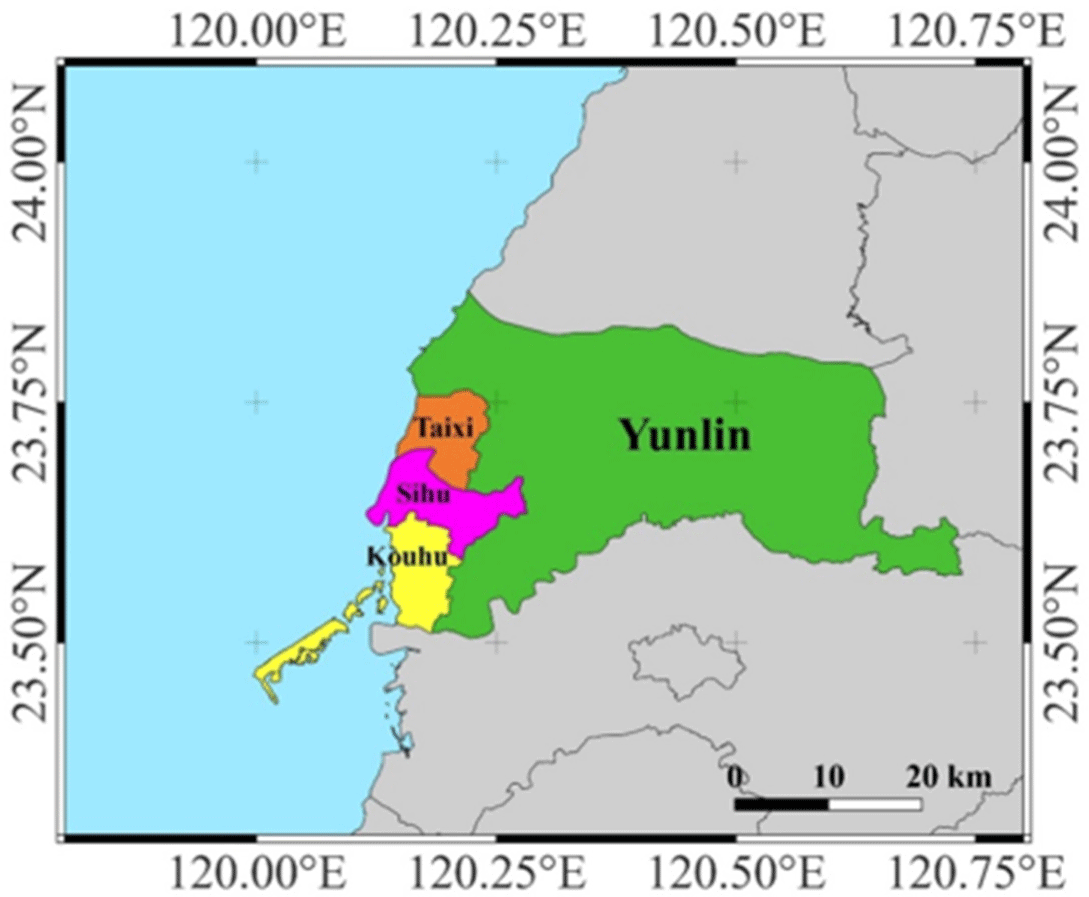
The study was conducted in Yunlin, a coastal area nestled in the Western part of Taiwan (Figure 1). Yunlin’s location along the Taiwan Strait has naturally blessed it with abundant marine resources, including fish (Lee and Lin, 2020; Yang et al., 2022). Fishery production accounts for about 66.45 percent of Yunlin’s total area (Lee and Hou, 2011). For centuries, fishing activities have been woven into the socio-cultural and economic fabric of coastal communities (Lee and Hou, 2011; Lee and Lin, 2020; Yang et al., 2022). Yunlin’s coastal location and plains have naturally carved out excellent fishing grounds and ports along its coastline, such as Boziliao, Santiaolun, Taixi, and Jinhu, where diverse FVC activities exist, and fisheries-related initiatives have been initiated (Chen, 2012; Yang et al., 2022). However, dominant livelihood activities, e.g., fishing, have become less lucrative, competitive, or threatened by coastal developments, forcing most coastal communities to migrate to urban areas for other opportunities (Chen, 2012; Yi et al., 2008). This emerging demographic and socioecological dividend is a worrying concern that requires exploration to at least sustain coastal communities’ livelihoods. These emerging gauntlets present a case to examine perspectives on how coastal shifts, including in fisheries, are affecting livelihoods and FVC practices.
A qualitative exploratory research design (QERD) was utilized (Carson, 1990; Ward, Comer, and Stone, 2018), as the study focused on capturing non-numerical data in Yunlin, to gain coastal fishers’ perspectives, narratives, experiences, and FVC behaviors. The rationale and the consideration of for the QERD in this study was based on three reasons, including: (i) QERD is grounded on ethnography and involves a small, non-representative sample size, thus enabling the timely collection of diverse coastal lived experiences or community or individual knowledge concepts that are less explored in mainstream studies, (ii) QERD promotes phased evolution of valuable themes, e.g., on FVC components through brainstorming and iterations, and (iii) it enhances participatory observation and capturing of diverse community practicalities. Studies that have utilized this method in coastal fisheries reportedly gained insights, identified patterns, and established a foundational understanding of the possible strategies for promoting fishers’ livelihoods (Lukambagire et al., 2024).
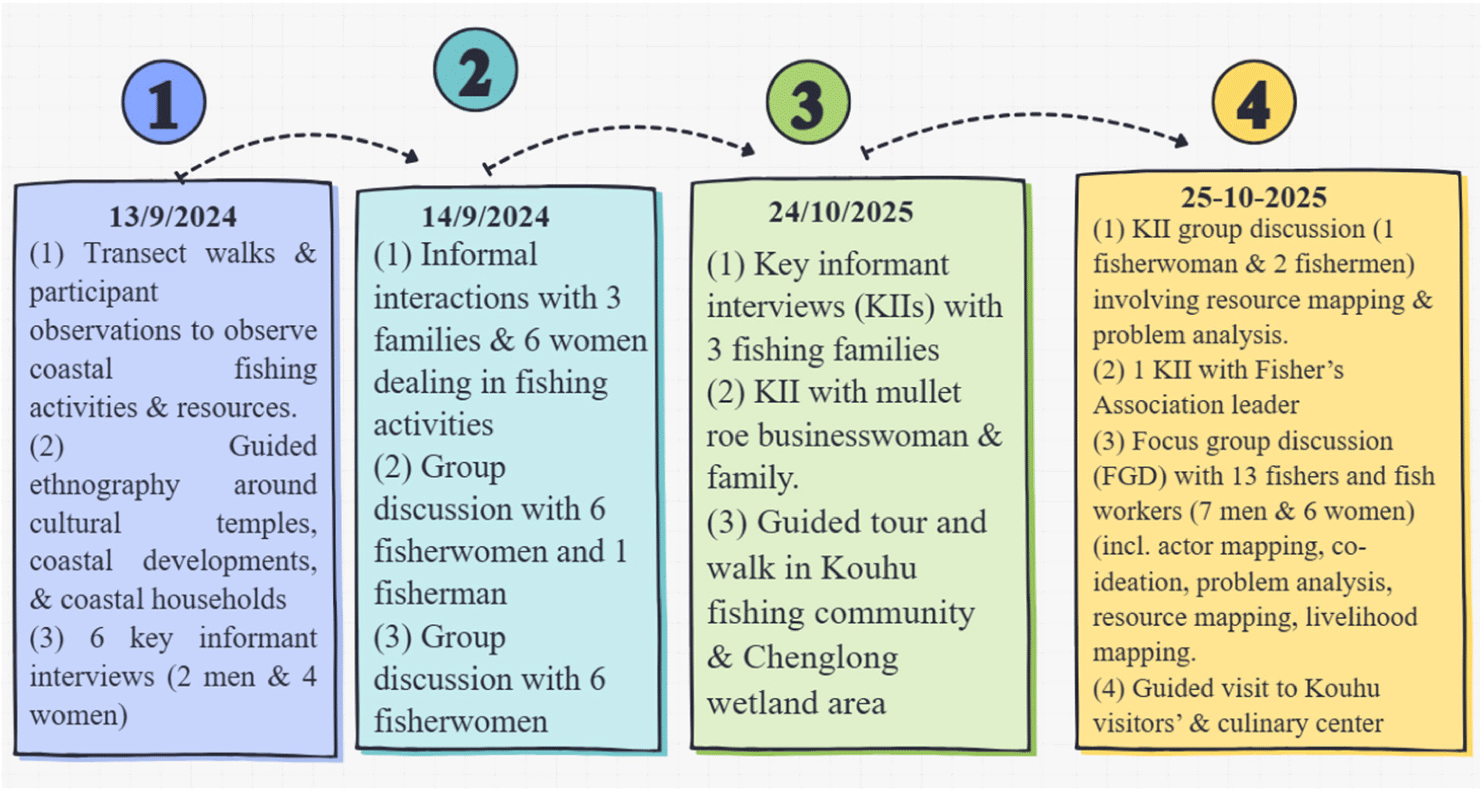
Field data collection was conducted in the coastal communities of Kouhu, Jinhu, Changhwa, Beigang, Mailiao, Sihu, and Taixi, involving phased participatory processes and activities (Figure 2). Participatory interactions and interviews were conducted with 43 stakeholders or fisher households, 70 percent of whom were women, notably those recommended through snowballing, to be astute FVC dealers or businesswomen. The average time for the interviews and focus group discussion (FGDs) was 1 to 2 hours, depending on the pre-agreed schedule, data, or response saturation after probing or satisfactorily answering the targeted questions. Contemporary ethnography involved complete immersion in the culture and everyday life of the coastal people and fisheries, e.g., by visiting local markets, tourist centers, coastal zones, and supermarkets, primary fishing and processing sites, as well as residential areas of fishers or VC actors, to practically observe and understand the activities they do, challenges, and innovative strategies. During the interviews and interactions, seven thematic components were targeted to help understand the FVC dynamics, including: (i) participants’ profiles, e.g., on whether they were born in or migrated to Yunlin, (ii) resource mapping (resources they are proud of or not proud of), (iii) livelihood documentation, (iv) seasonal FVC activities mapping, (v) FVC actors and their roles, (vi) FVC problem analysis, and (vii) co-ideating sustainable FVC activities or actions.
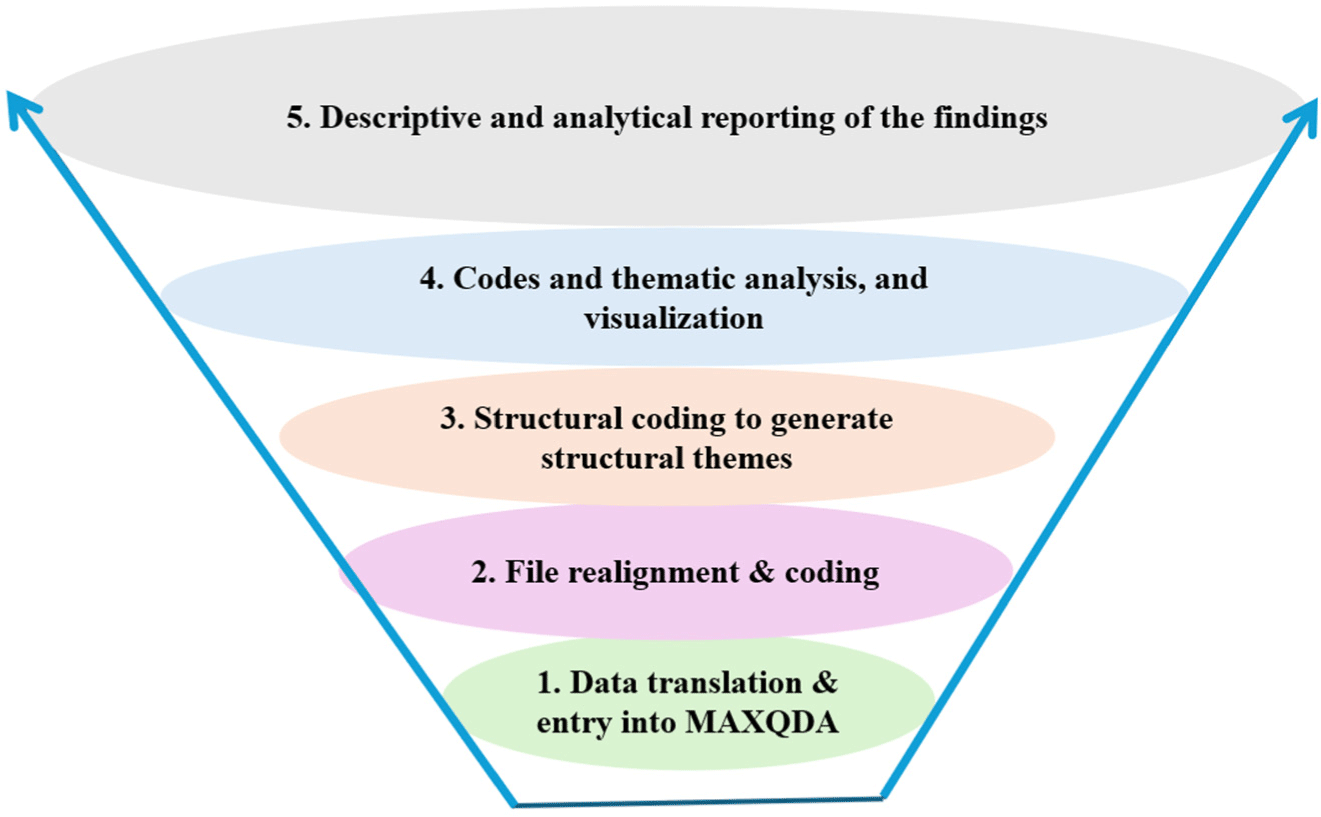
As recommended in social science research studies (Glaser, 1992), unlike explanatory research, exploratory data analysis began during the data collection phase. To do this, the written notes and audio were immediately transcribed verbatim from Taiwanese (Chinese) into English with the help of three research assistants. This helped in generating new ideas and concepts on Yunlin’s FVC, including the cultural concept and socioecological systems (SES) links. All this information, including the entire areas traversed for data collection, was recorded as memos. To further analyze the collected data, MAXQDA software was utilized, and the process followed in data entry and analysis is indicated in Figure 3. The initial analytic phase in Max Weber Qualitative Data Analysis (MAXQDA) led to the generation of a single Microsoft Word document that included all the translated field data. This was followed by the utilization of the MAXQDA Analytics Pro software to: (i) import the converted Microsoft Word file into the MAXQDA analysis dashboard, (ii) develop codes, and (iii) generate qualitative narratives, themes, or insights from field data on FVC (Gizzi and Rädiker, 2021) (See coded transcript: https://tinyurl.com/4faks9d6). The coding focused on generating structural codes to enhance the grouping and mapping of themes relevant to Yunlin or regional FVC dynamics.
The reporting process involved the integration of rich field photos, MAXQDA-generated themes, and redesigned visualizations to comprehensively document diverse FVC aspects. Guided by Glaser’s (1992) recommendations, a descriptive content analysis and reflective process were utilized to explain the diverse nuances around Yunlin’s coastal communities, SES, and FVC aspects. Through this, interrelated issues around regional and global FVC were brought out, including unique narratives and perspectives from Yunlin, which could be replicated.
3. Results
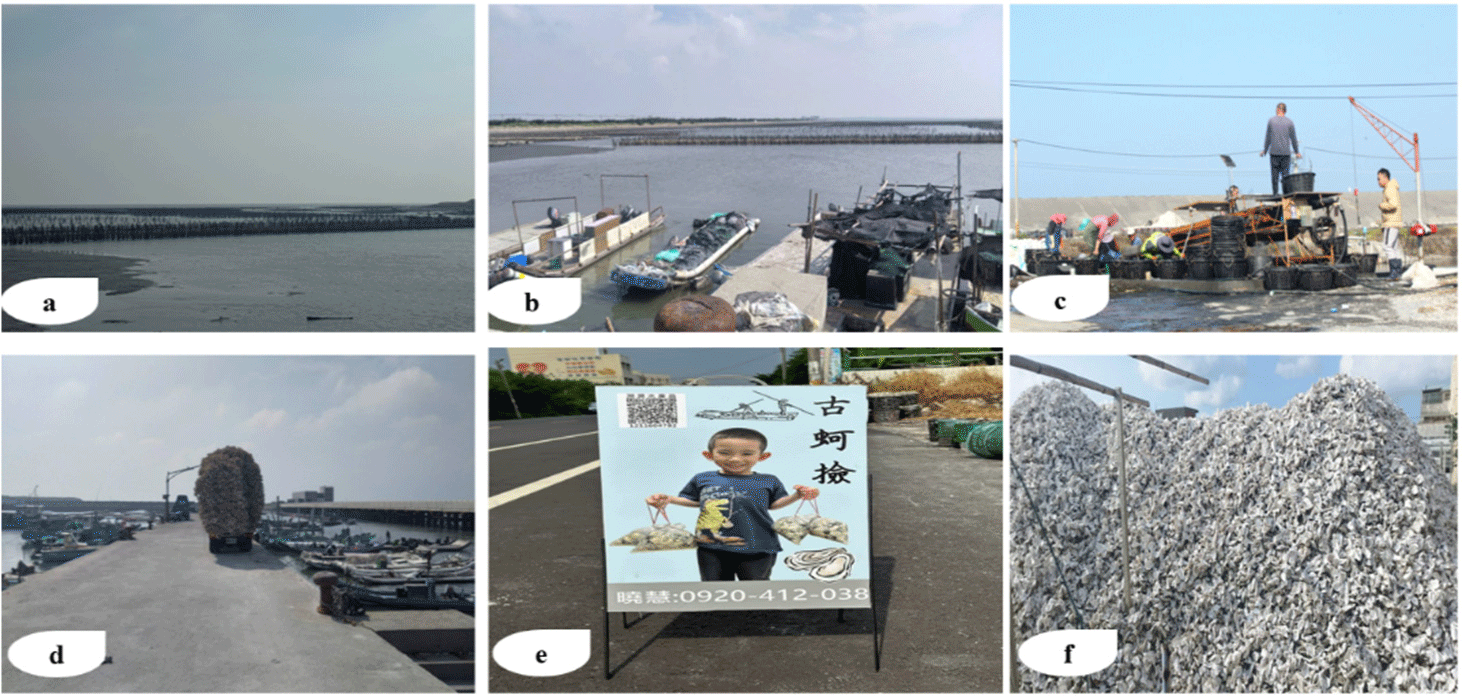
Key informants, especially from the Yunlin Offshore Fisheries Association (YOFA), reported that for centuries, the livelihood bedrock of Yunlin has been coastal and offshore fishing. Historically, unique fisheries practices existed based on the fish vessels and fishers’ ability to reach the deep sea or offshore areas. Most often, large fishing vessels that harvested catch from the deep sea anchored and traded with distant or commercial fishing vessels of dealers, especially at Bazi Liao Fishing Port. Conversely, SSF and fishing vessels mostly operated in the nearshore areas. However, most commercial fishing vessels and dealers, e.g., those who traded in highly lucrative species, have shifted to other locations, partly due to Yunlin’s changing coastal socioecological landscape and dwindling stocks. Today, Yunlin’s coastal livelihood and FVC development activities vary depending on location, with some fishing ports, e.g., around wind and renewable energy installations, ports or ship-building zones, and integrated aquaculture and rice farming zones collapsing. In such areas, e.g., Taixi, fishers have resorted to small- and medium-scale FVC operations, mostly involving oyster and otolith ruber fishing, small-scale (family-run) aquaculture, fish processing, trade, and roadside fish-selling restaurants, e.g., at Kouhu Visitor Center or business (Figure 4).
Today, it was reported that the changing seasonal parameters, environmental conditions, and fishing pressures imply that fishing activities and species are varying. Dominant catches (although less lucrative), e.g., Cynoglossidae, are mainly harvested from October to March, and Mullets are caught in autumn and winter. In other seasons, Sillaginidae and Otolith ruber will be caught, but this is changing. Yunlin’s unique coastal fishing history was candidly reported by some fishers and fishing households with over 40 years of fishing business, and managing a 20-year-old fishing business that
‘In Yunlin, fishing has been the dominant livelihood activity. In the past, oyster and clam fishing predominated…There is also a small number of small-scale coastal fishers who harvest species, such as Otoliths ruber, Sillaginidae, and Epinephelinae….The elderly have worked in this industry for decades, generally don’t switch to other sectors, and they still identify themselves as fishers, having deep roots in this land…Some fishers, e.g., in Kouhu township, have shifted to operating recreational fishing boats, which peaked about five or six years ago, but have since dwindled significantly.’
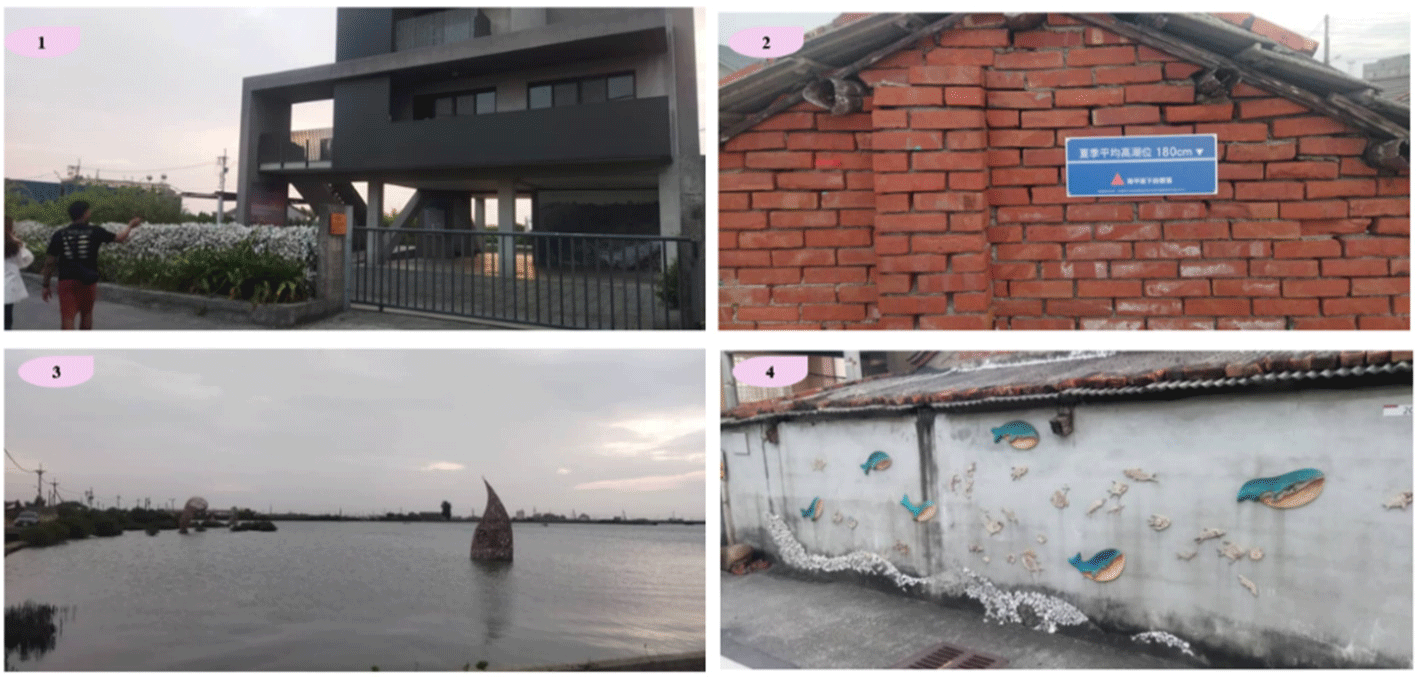
To safeguard this history and livelihood attachment, which is ingrained within Yunlin’s socio-cultural fabric and beliefs, elderly persons who have lived in Kouhu reported an emphasis on citizens’ science, art, music, and drama, as pioneered by influential writers, e.g., Zheng Fengxi, who documented Yunlin’s potential and unique coastal and cultural activities, e.g., fishing festivals, and seminars, which are annually commemorated. To safeguard this uniqueness, during guided tours, most households, youths, and fishers decorate their houses, courtyards, and shared spaces with unique arts and designs, that represent Yunlin’s fishing identity, and history, e.g., on previous tidal or flooding regimes (Figure 5). Accordingly, this is meant to naturally communicate Yunlin’s treasures and shared willingness to drive sustainability transformations in marine and coastal activities, e.g., fishing, reducing fish products waste, and mangrove resource conservation. This unravels the unique attachment to fishing as a livelihood identity irrespective of adversity, including seasonal fishing activities and trade.
Through the safeguarding of Yunlin’s fishing history, unique FVC networks and operations have become more resilient and sustainable. Among the most reported sustainable FVC businesses and operations are intergenerational family businesses or household fishing enterprises, some of which have forced young people who had migrated to major cities, e.g., Taipei or Kaohsiung (in search of better lives and opportunities), to return to Yunlin. A key informant (woman) engaged in a family-run Mullet Roe business and has expanded it into a company called ‘Li Mullet Roe’ candidly reported that she returned to Kouhu a few years ago to document and support the sales of the family’s dried mullet (home-processed fish product). Today, this company has not only ventured into sustainable mullet roe culturing but also established market collaborations with regional companies in Japan and supplies fully processed and high-quality mullet roe to consumers all over Taiwan (Figure 6). This business model has been expanded to include a restaurant, processed pineapple cakes, digital delivery systems, and resource center where university students and researchers frequently learn about the dynamics of mullet roe FVC, including eco-friendly preservation, packaging, and natural aromatic techniques.
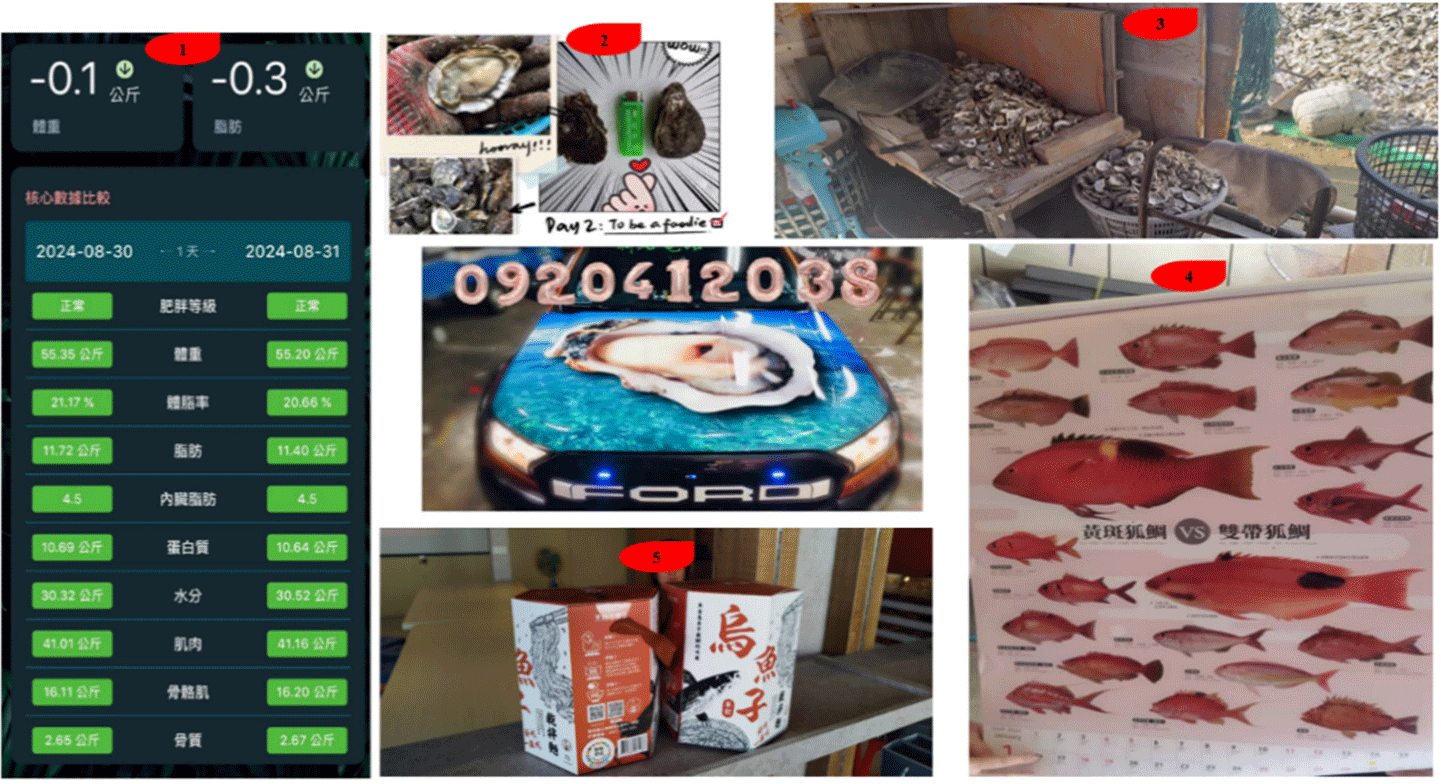
A related attachment and unique FVC model were reported in Taixi and Beigang by a fisherwomen’s business group and women-led households dealing in oyster cultivation, harvesting, processing, selling, online marketing, and by-product recycling (Figure 6). These micro-level fishing groups, families, and households have created specialized FVC activities, including role allocation in fish harvesting, oyster planting, cleaning, processing, marketing, delivery, consumption, and recycling, although with diverse livelihood benefits and outcomes. In Taixi and Changhwa, it was narrated that key actors operate seasonally, e.g., small women-led businesses, local people, retailers, family members, individual households, local markets, restaurants, local ice factories, local shops, and institutional players. Before August 2024, several oyster farmers sold to big wholesalers, but since August 2024, we have shifted to retailers and local business dealers, who offer quick and flexible payment means. Most oyster shells are sold to local businesspeople and community groups. The oyster business, e.g., in Taixi is conducted by cooperative groups, e.g., of women, and for deep-sea fishers, they are registered under YOFA. Through YOFA, dominant species calendars and names have been profiled to help fishers know Yunlin’s fish species and their biology. To further boost their sales, most local fish families have developed unique digital marketing strategies, including the use of social media platforms, e.g., Facebook Pages and Line. Moreover, established cooperation mechanisms with local barbecue stores and restaurants in nearby towns, e.g., Beigang, are established. Additionally, families dealing in similar or related products share ideas on product value addition and market research for their processed and semi-processed products, after which profits are shared (money pooling). They intend to collaborate with investors and innovators to start up a local processing factory, which can process their harvested products in large quantities. This reveals that in Yunlin, FVC are not seldom to men but women are increasingly visible at all FVC levels, and in some households, they reported significant power, e.g., in business management and community leadership. Some of the unique innovations and eco-friendly FVC practices were reported by women dealing in the oyster trade, who said that
‘Most of us have (family, group, or household-owned) oyster farms. We have been doing this for the last 15 years. The oysters are bought, graded, and the bad or low-quality oyster is removed. We have a machine that punctures the low-quality shells, which are taken back to the sea to create new oyster platforms where young oysters hang, grow, and we re-harvest them from these platforms when they are ready. To supplement the production, we buy some of the harvested oysters from other farmers. Normally, bad oyster shells have a bad color and structure, and young oysters cannot hang or be attached to them. For this, we clean it and supply to processing factories to make other products, e.g., powder (fertilizers).’
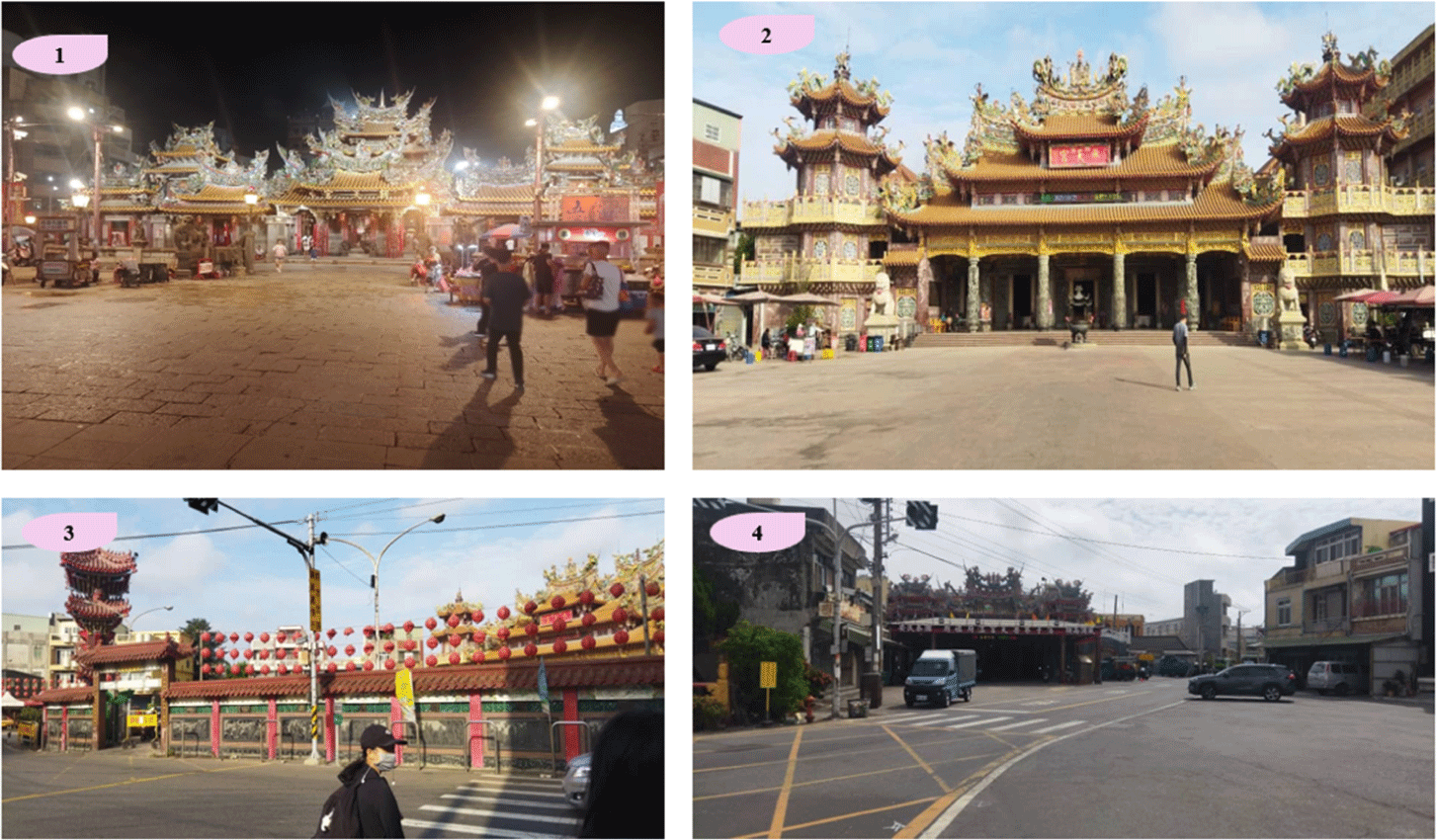
The unique and promising sustainable micro-level FVC indicators are reportedly hinged on shared socio-cultural beliefs, norms, and values, coiled around noble religious temples or sites (Figure 7). Through Yunlin’s coastal fishing areas, unique temples, e.g., the Mazu (Chaotian) Temple in Beigang, are the emblem of fishers’ livelihood, fortunes, attraction, and way of life. The Mazu temple in Beigang is a noble religious site that attracts over one million pilgrims annually. The prominence of the temple coincided with the era of Yunlin’s coastal economic boom in the 17th century. All the socio-cultural, spiritual, and economic tapestries of Yunlin are in one way or another attached to the temple. Coastal fishers frequently visit the temple for blessings and offerings. Most elderly fishers and business owners succinctly argued that such cultural treasures must be preserved, and this knowledge must be passed on to new generations. The cultural connection to Yunlin’s coastal livelihoods has further influenced the nature of local development projects, e.g., Provincial Highway 61, which was reportedly set up to improve accessibility of fishers to local markets, e.g., in Taixi and Kouhu, and link remote fishing communities, with several retired women who are engaged in fishing related activities, such as Oyster shell cleaning, and roadside marketing that are located in key nodal marketing zones. Most importantly, the role of local actors, especially coastal women and cultural leaders, in sustaining sustainable FVC safeguards is a consistent feature observed in Yunlin. This was candidly reported by a native who migrated from Pingtung to Kouhu after marriage in 1948, and recollected that,
‘Kouhu is a place rich in talent, with contributions from local writers. Cultural learning has improved convenience in daily life and choices in retirement, focusing on community involvement and foundational work. These activities are relatively inexpensive and encourage more (schools and community) participation (i.e., in sustainable practices). Rebuilding of Zheng Fengxi memorial library and retaining the original ship-shaped building is great.’
Due to seasonal fish availability, primary fishers and families have ventured into large-scale aquaculture to ensure massive production and dividends. Through guided walks, several nearshore and coastal areas of Yunlin are layered with huge aquaculture farms producing diverse species. To local dealers, this has come along with mixed outcomes, especially to SSF or small enterprises, which cannot compete with commercial producers. As reported in Taixi and Kouhu, most of the large farmers target lucrative markets or sell to wholesalers who offer higher prices. Women reportedly fear that external actors and their activities (inputs) are steadily compromising the long-established, relatively sustainable, and innovative FVC practices. Some of the externalities include massive coastal developments limiting access to traditional fishing grounds with indigenous species. Also, key informants reported that massive production by commercial dealers would not have been a problem per se, but it has come at a time when Yunlin’s coastal population is ageing, youths are migrating to towns, and the environmental conditions are worsening, including the frequency of typhoons, which destroy small oyster farms and small-scale primary and secondary FVC support infrastructure. Moreover, small-scale oyster and shrimp farmers are facing cut-throat competition emanating from the importation of Vietnamese products into the local market. To minimize costs and remain in business, some family-run enterprises have recruited migrant labor, some of whom come from Indonesia and the Philippines to fill the labour gap in restaurants and on farms. Nevertheless, most local actors fear that these actions might not be enough to repel wholesalers or consumers who prefer huge volumes of fresh and processed products and have stringent certification requirements.
Diverse FVC and SES ramifications were reported depending on the scale of operations, location, and livelihood assets or survival alternatives. Headlining this is the acknowledgement that FVC has become more complex and SSF are threatened. This is irrespective of the reported household or individual benefits reported, e.g., by YOFA and fishers in fish-trading or business. Four main drivers of FVC complexity were reported including: (i) limited cooperation among local fishing communities and commercial dealers, (ii) entry of external actors (local and foreign) into the FVC, (iii) coastal developments that affect primary FVC activities, and (iv) pedestrian institutional support or limited knowledge of the government support infrastructure, especially to small-scale dealers and fishing families in some coastal areas, such as Taixi. Micro-level FVC actors reportedly feel many livelihood survival pressures and that they might be knocked out of the secondary and tertiary FVC activities, e.g., in marketing and processing. This is worsened by the catastrophic shifts in SES across coastal Yunlin (Table 1). Most often, these challenges have mutated into bleak livelihood futures, and natural (fish) resource declines or conflicts, as natural resource or environmental damage in Yunlin is reportedly difficult to restore. Around Beigang, Taixi, and Changhwa, it was candidly reported that
‘…knowledge of small government support programs is unknown. Most people have not been given government support here. In nearby townships, such as Kouhu and Mailiao, we hear reports that their communities have been supported by giving them fish certificates. Certificates help the fishers get approvals and support from the government line agencies.’
Note: 1) Primary VC activities in the study comprise all aspects related to on-site fish harvesting & storage. Secondary are those done within the community, but away from the primary fishing site, e.g., home Oyster cleaning, marketing, and sorting. Tertiary activities include all post-harvest VC activities, e.g., large-scale processing, customer acquisition and retention, market analysis, and inter-regional trade.
Diverse stakeholders reported that Yunlin presents unique and diverse possibilities to circumvent historical, emerging, and future FVC conundrums. Prominently emphasized is the re-inventing of Yunlin’s development visions by recognizing the shared place attachment, resources, and livelihood capitals, which have made local actors and fishers more innovative and resilient. Through interactive sessions and qualitative analysis, 44 sustainability perspectives were revealed (Table 2). To individual fishers and fishing groups with attachment to Yunlin, these perspectives reminisce about the community wisdom, knowledge spaces, and innovations that are mostly unique to Yunlin’s socio-cultural history and development perspectives. To resoundingly sustain better FVC operations, practices, and activate win-win sustainability outcomes, stakeholders emphasized the relegation of siloed institutional programs, focusing on fishing as an integrated business and social identity, and a focus on integrated resource nexus and SES approaches. Going forward, they argued that this can be legitimized through collaborative institutional mechanisms that not only recognize micro-level communities’ value or role in coastal and FVC development but also ameliorate SES pressures. During FGDs, stakeholders resoundingly argued that if micro-level sustainability actions are not cemented, ripple effects and shocks, e.g., Oyster supplies will decline or collapse, affecting tertiary FVC activities and actors (who mostly rely on primary production and secondary FVC actors, e.g., Oyster and Clam fish and shell cleaning and sorting women.
All stakeholders recognized the fragility of Yunlin’s FVC and thus, through a guided co-designing process, participants re-created and re-constructed an inclusive FVC that could advance blue transformations and win-win actor benefits (Figure 8). The contextual model or design focused on mind mapping and a collaborative actor mapping approach to identify and situate which actors and actor roles could promote ‘fair’ FVC practices, and what is needed to achieve these prospects. The conceptualized FVC model includes three levels that specify system boundary operation zones for key actors, inclusive actors’ activities (inputs and outputs), and their interactions, which could create positive synergies and intersections for sustainable FVC operations. A detailed description of the model and its relevance towards sustainable fisheries VC is explained below.
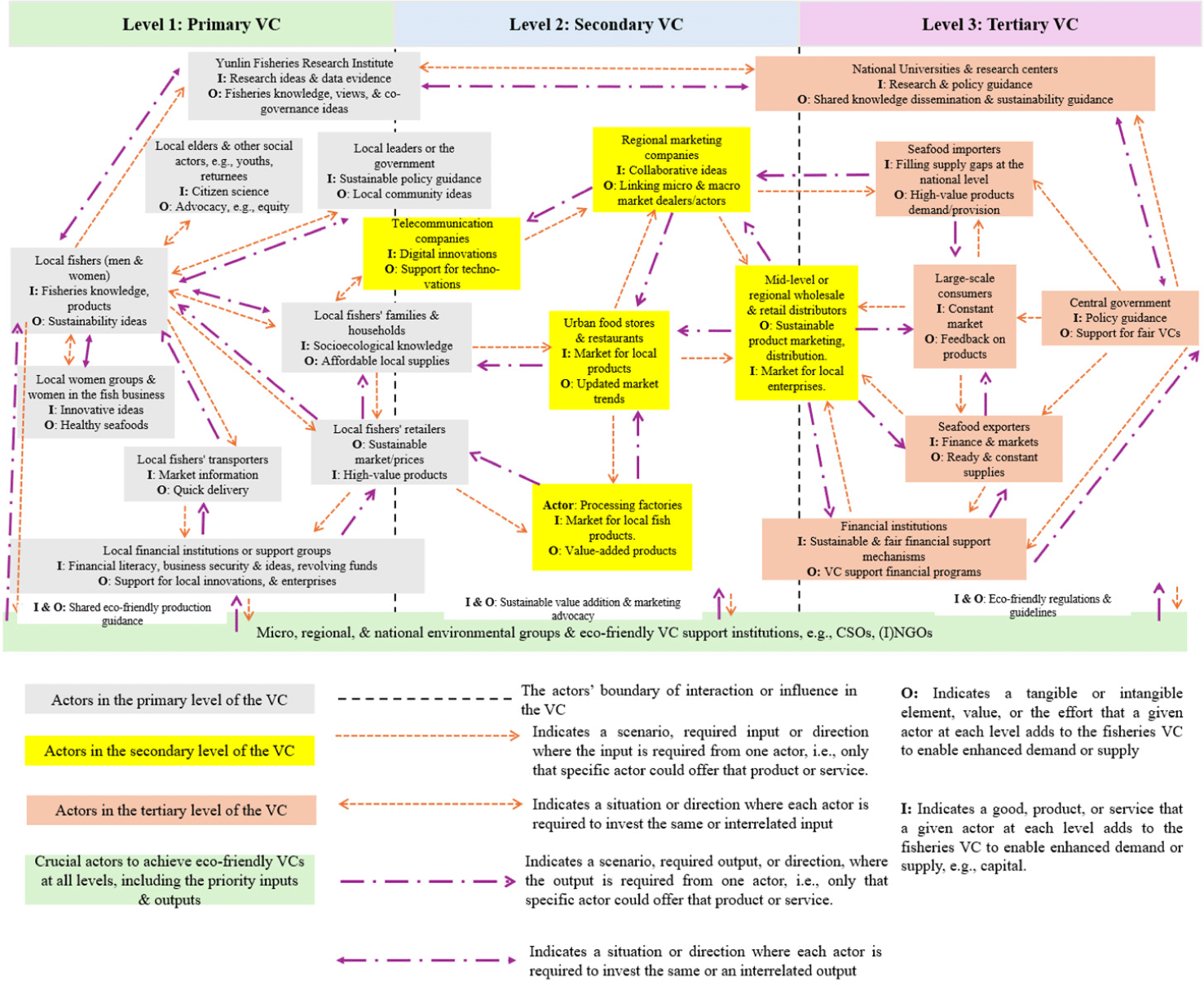
The insightful and conceptualized perspectives in Yunlin demonstrate feasible inroads for sustainable FVCs. Invaluably, it was acknowledged that the entire FVC is and must be a theatre where external and internal actors operate. Nevertheless, given the special case of Yunlin, they argued that stakeholder interplay must be based on resilience rather than irreparable primary FVC losses or SES threats. This is because most external actors (i.e., non-residents or actors without the intrinsic and established socio-economic and historical resource user networks), and their activities are mostly hinged on quick profits, or massive fishery resource exploitation to satisfy the demand-supply agreements, especially with large conglomerates. Thus, the primary or micro-level FVC system should be less linear (production-processing-marketing-consumption-waste) but more circular (production-processing-marketing-consumption-recycling-reuse). This can help sustain fish as food or consumable for all, rather than fish as an extractive resource for a few. To cascade away from this complex and unsustainable ecology, actors argued that a sustainable and fair FVC should:
-
a) Include operational boundary levels for primary, secondary, and tertiary actors
-
b) Focus on strategic stakeholder identification and role allocation at each FVC stage or level
-
c) Link actor interactions through integrated system analysis, including the elucidation of the inputs and outputs the actors have in the FVC or SES, e.g., goods, services, value added, or value composition, and
-
d) Cobweb holistic sustainability targets, outcomes, and value at all FVC levels.
At Level 1 (primary FVC), it was argued that external factors, such as telecommunication companies or research institutions, e.g., the National Taiwan Ocean University (NTOU) or National Taiwan University, and environmental or eco-friendly FVC actors, should come in only if they add value or unique inputs or outputs that sustain the local fisheries FVC, e.g., through impactful anthropology or oceanography and fisheries research. For instance, women in the fish business argued that telecommunication companies or digital technologies dealers could add value by providing affordable technological products or data bundles that increase or support the already existing innovations, such as social media or digital platforms, to stimulate small-scale fisherwomen’s businesses or increase real-time monitoring of demand and supply patterns or markets. Additionally, a case was presented to include key local stakeholders, such as the elderly and youth, as they can advance socioecological knowledge dissemination or advocacy for sustainable practices, with environmental actors or research institutions. An insightful inclusion was the fisheries research institute at Beigang, which has been paramount in conducting marine fisheries science research. However, fishers argued that marine socioecological knowledge could strategically be included in the research menu to provide a holistic lens of Yunlin’s marine socio-cultural, ecological, and fisheries perspectives or science, to improve local SES resilience and livelihood knowledge, thus co-creating sustainable governance ideas. Three valuable takeaways stood out at the primary level: (1) micro-level actors can satisfy the local demand-supply requirements of Yunlin if safeguards and a few system shocking actors or negative feedback interactions, e.g., exploitative or economic-centered actors come in, (2) the core driver of primary FVC activities are the fisher families, households, and women, (3) through local fishers (women and elderly) history and experience in creating marketing networks or increasing customer base, local fisher families, households, and retailers become stewards in linking secondary to primary actors, reducing chances of unscrupulous micro-level dealers or price manipulation by monopolies. Micro-level primary FVC safeguards increase chances for fish conversion into sustainable and highly valuable or sellable products, including fishmeal for small-scale aquaculture dealers and fish-consuming families or households.
Level 2 covers the actors at the secondary FVCs. Accordingly, this level must encompass fish dealers (both large and medium scale). To mitigate micro-level fish scarcity or price distortions, the sourced resources, inputs, and outputs of these actors should be in tandem with each other and be based on supplies from micro-level actors (i.e., Level 1). As indicated in Figure 8, the key input required from these actors is sustainable market provision to all sourced fish species or semi-processed fish products, including shells. These products can be utilized for value addition and traded with large (regional) wholesalers, e.g., in Beigang, who have the capital and ability to supply to other regional, national, or international consumers. Additionally, as part of corporate social responsibility, Level 2 actors could steer and support digital transformations (as an input), in partnership with telecommunications and or digital technologies actors. This could then be harnessed by Level 1 actors, e.g., in comprehending market trends, knowing who and when to sell to, and how to deliver goods or services to a given consumer segment, among others. Most importantly, eco-friendly financing support initiatives, e.g., green home-based fish value addition financing, with Level 2 actors were emphasized. These can mitigate ‘money rush’ and unfairness in investment entries by Level 2 actors, which normally knock out the financially constrained Level 1 actors, via patron-client exploitation (by powerful conglomerates). This could alleviate economic and resource access pressures by Level 1 actors. This mechanism could be supported through collaborative transitions with intermediary dealers or the highest bidding companies, who focus on sustainable production mechanisms, including on sustained provision of micro-level community fish food needs.
In Level 3 (tertiary FVC), preference for large-scale or powerful external actors, including large wholesalers and conglomerates, with huge capital and investment potential, was emphasized. In other words, large-scale and external actors should mostly operate at tertiary FVC levels, as such actors can compromise demand-supply mechanisms, customer base, or flood micro-level and regional-level markets with products that increase rivalry between Level 1 and Level 2 actors. Additionally, as powerful actors normally get unfair preferences, e.g., tax rebates and subsidies, e.g., on imported seafood products, acceptable limits on their operations must be set up. This is because, in Yunlin’s case, conglomerates importing seafood products have: (i) created a parallel or external FVC system, making it difficult for small-scale retailers and primary dealers, e.g., to supply local stores or markets, that have historically taken their excess or semi-processed products, and (ii) increased production stresses as local producers harvest any type of fish to supply exporters and processors, e.g., of fish meal. These emerging local and regional market dynamics have lessened the volume of fishery products reaching Level 1 and 2 actors, and caused price spikes, making it hard to put fish on the table. Thus, at Level 3, the key actor who can reverse or balance the FVC conundrum is the Central government, and this can be done through the promotion of inclusive and supportive FVC programs or mechanisms. Such mechanisms must encompass eco-friendly guidelines and legislation, e.g., on reducing fish waste and price controls along the FVCs. This can be done through collaborative research and knowledge sharing with key actors, e.g., research institutions, fishers or coastal community groups, environmental advocacy groups, and (International) or national Non-Governmental Organizations (INGOs), among others. In all cases, the central government’s actions must be coherent and systematically hinge on factual data and transdisciplinary evidence from experts and local SES knowledge.
4. Discussion and Reflections
This study explored the complex nuances around coastal fisheries and FVC in Yunlin, to unmask valuable perspectives from coastal communities on how or what a sustainable and inclusive FVC should be or encompass. Perspectives in Yunlin reinforce existing literature about FVC complexities and the associated or emerging trade-offs. As reported in Yunlin, although fish and fishing are critically important to livelihoods and community identity (Harding et al., 2022; Korowi et al., 2025; Mahmud, Zaman, and Haque, 2025; Spalding et al., 2023), an interplay of shifting SES and FVC dynamics implies that this may be no more (Shea et al., 2025; Smith, Khoa, and Lorenzen, 2005; Temesgen, Getahun, and Lemma, 2019). This is because SSF and micro-level actors, e.g., women entrepreneurs and family-run businesses, which have historically been embedded within fishing activities and driving FVC, are slowly but steadily losing their grip on key markets and products, especially to large-scale dealers or powerful actors. As reported by Thara (2016) and Rubinoff (1999), it signifies that the (in)-visible role that primary FVC actors have played, including their unique skills, e.g., in fish value addition, could be lost. Similar observations are reported in Vietnam (Harper et al., 2017; Mahmud, Zaman, and Haque, 2025) and Papua New Guinea (Chapman, 1987; Rohe, Schlüter, and Ferse, 2018), among others. Nevertheless, insightful eco-friendly practices which could reverse this trajectory were reported in Yunlin, including bycatch recycling, creation of oyster foundations, or fertilizers, among others. If supported, such opportunities and contributions could aid innovations, e.g., in making agro-based fish or nutrient-rich poultry meals, as recommended by (Brugere et al., 2021; Thakur, Kotiyal, and Thoudam, 2025), thus mitigating the increasing worries associated with fish-meal costs, especially among aquaculture farmers (Thakur, Kotiyal, and Thoudam, 2025).
Unfortunately, as reported and observed in Yunlin, the commendable role of micro-level actors is mostly under-reported, underrated, or less appreciated, creating perilous indicators for coastal FVC activities, SES, and community livelihoods. The perilous nature of the utterly fragmented, unsustainable shifts across regional and global FVC, thus requiring a fish-food-food system thinking lens, is reported in several studies (Jyotishi, 2023; Nyiawung, Bennett, and Loring, 2023; Shea et al., 2025). Scholars argue that populist economic-centered FVC models proliferate, creating unsustainable demand-supply landscapes, and a need for a rethink of the FVC modus operandi. Consistent with Yunlin fishers’ perspectives, reversing this requires a tiered approach (levels) that situates actors’ diverse operations into the site-specific FVC realities, including in capture production, provisioning, governance, and consumption constellations. Such mechanisms could advance important foundational steps for understanding FVC complexity, thus promoting sustainable governance, policy formulation, and collaborative extra-transactional actors mechanisms that shape seafood or fish product or material flows. Through such mechanisms, possibilities of sustaining fish provisioning for consumption and for other values, e.g., processing for fishmeal, could be sustained (Erzini et al., 2024; FAO, 2024a; Oosterveer, 2008).
The rationale for this perspective is supported by the sickening fish production and provisioning trends, both as a consumer and a user commodity. This debacle is magnified by globalized trends in FVC, which have created governance challenges, e.g., in sustainable marketing and consumption patterns (Jyotishi, 2023; Oosterveer, 2008). Global FVC shifts and demand patterns have turned fish into a commodified asset destined to satisfy the more lucrative global fishmeal production market, rather than serve the human consumption needs (Shea et al., 2025). Today, 66 percent of wild fish are utilized by fish processing dealers as aquaculture feed or fishmeal (Shea et al., 2025). This implies that if no safeguards are established, e.g., in Yunlin, fish for human consumption might be compromised or diverted to support aquaculture feed in the ever-increasing aquaculture farms. More worryingly, on a global and regional scale, countries with food security or population nutrition needs, e.g., Peru (1,003.36 thousand metric tons of harvested fish) are unwittingly supplied and processed as fish meal, and 100.33 thousand metric tons target massive fish oil processing (Shea et al., 2025). This could slap astronomical fish price volatilities, artificial shortages created by dealers, and fish-for-consumption volume declines, as warned by Asche, Dahl, and Steen (2015) and Deb, Dey, and Surathkal (2022).
Moreover, in Yunlin, as summarized in Table 1, the emerging unbridled FVC dynamics and challenges have gained limited key institutional stakeholders’ interest, jeopardizing long-established FVC practices, including specializations on role allocation, food security, fair FVC networks, and trust in shared resources. Institutional disregard of primary FVC practices has emerged as a topical issue in tropical regions, e.g., West Africa, and has mutated into meteoric fish declines (due to the entry of external or commercial actors in micro-level FVC activities) (Belhabib, Greer, and Pauly, 2018; Belhabib et al., 2019; Etta, Matovu, and Lukambagire, 2025; Failler, 2014; Wamukota and McClanahan, 2017). Without institutional support, resilience options, including unique SES knowledge or innovations, hardly become sustainable (Brugere et al., 2021; Harding et al., 2022; Korowi et al., 2025; Mahmud, Zaman, and Haque, 2025). Fortunately, in Yunlin, as indicated in Table 2, invaluable stakeholder views on how to re-create fair and integrated FVC were reported. Moreover, as a way of re-inventing FVC practices, a sustainable and integrated FVC model or design was co-developed. A key takeaway from Yunlin is that for sustainable FVC to emerge, a need to diverge from linear to circular FVC practices is needed. In other words, fish actors should not exclusively focus on quick economic gains but integrate other sustainability and SES components, including recycling and socio-cultural resilience. To achieve scalability and impact, specific levels of FVC and actor operations are needed. Critically, most of the tenets reported in Yunlin encompass diverse empowerment and sustainability spaces, including digital marketing and eco-friendly practices, implying that they could be integrated into emerging regional and global roadmaps, e.g., the 2021–2030 FAO blue transformation roadmap and SSF guidelines on sustainable fishing. Indeed, as argued by actors in Yunlin, perspectives in Yunlin present and unravel insightful opportunities that could be scaled up for sustainable fisheries and community transformations.
5. Conclusion and Way Forward
This study utilized a QERD and explored perspectives from 43 coastal fishing communities from Yunlin to question and shed light on what a sustainable and inclusive FVC must entail. Stakeholders unmasked premium fisheries and FVC dynamics vis-à-vis the changing SES in coastal areas. Stakeholders, especially family business owners, and innovative fisherwomen groups trained us that, irrespective of FVC complexity, promoting sustainable and inclusive FVC practices, especially at micro-levels where long-established socio-cultural ties exist, is possible. These ties are strengthened through collaborative actor mechanisms and role allocation across the FVC, including youths, women, the elderly, fisher groups, and community or regional wholesalers. However, the success of these mechanisms depends on robust institutional and FVC safeguards. In Yunlin, these safeguards are increasingly breached through a nexus of external actors’ entry, SES, environmental pressures, and mushrooming coastal developments. Although innovative practices, e.g., oyster shell recycling, and women-led marketing groups or fishers’ associations, have been developed, the limited institutional support, coupled with market volatility, implies that micro-level fisheries and primary FVC actors are increasingly threatened. More worryingly, due to massive renewable energy projects and developments, fishers argue that even primary wild species are migrating, and yet transitions to capital-intensive aquaculture are beyond reach, notably for elderly or socioeconomically disadvantaged families. To Yunlin’s FVC actors, e.g., wild oyster cultivators, current FVC practices and coastal developments have regurgitated socioeconomic and environmental losses, ruined foundational social governance hegemony, and created parallels between institutional state and non-state FVC actors. These challenges might proliferate into natural resource user conflicts or disregard for shared coastal resources governance in the future, if micro-level community perspectives are disbanded or ignored. Nevertheless, the FVC reconceptualization process highlighted that immense opportunities for better futures are present and require unlocking. The developed fair and sustainable FVC design reveals that safeguards are needed to shield or apportion FVC and actor operations. This can create a win-win FVC system practice and save the reported unique resilience and sustainable practices. As this paper documented, an initial but vital step that could guide sustainable fisheries and FVC practices, most of which are replicable, six practical and policy recommendations are put forward, including;
-
1) Kickstarting baseline SES impact assessments and fisheries inventories amidst emerging coastal megatrends and projects is vital. This can help safeguard fisheries resources, valuable FVC practices, and unique community livelihood capitals that aid resilience.
-
2) Advancing FVC and coastal equity and justice in fishing and marine-based related activities, projects, and programs that directly and indirectly affect livelihood assets, communal or shared capitals. This can promote a sustainable blue economy and blue transitions, including fish-related value-addition practices.
-
3) Prioritizing food security needs of small-scale and primary FVC actors over wholesalers is vital for community livelihood resilience. This is because, as wild catch and farmed species harvests are declining, livelihood security is compromised. This can be done through creating direct and innovative seafood marketing and flexible customer acquisition avenues, rather than cooperating or preferring external large FVC conglomerates.
-
4) Promotion of a shared FVC empowerment model. This should be co-designed in a manner that promotes and advances micro-level household or existing innovative marketing platforms or seafood certification, or clean production models, and social systems, managed based on specific FVC actors, levels, or eco-friendly FVC guidelines or practices. This can be done in collaboration with supporting entities, non-state, and state actors, to enable (in)-direct sharing of benefits emanating from established FVC practices.
-
5) Co-designing cooperative FVC business models. These should involve neutral co-managers across the production and marketing FVC rather than lead managers (who oversee all FVC activities). This can promote willingness to cooperate or operate together and support the development of unique certification guidelines or programs for fish products or actors advancing sustainable practices, e.g., in recycling, clean post-harvest handling, and transparent digital marketing models.
-
6) Developing new site-specific or pilot models for coastal FVC. Since most micro-level FVC systems or operations are similar, yet the inputs and outputs vary, innovative business applications or production systems are needed to reduce reliance on wild catch and preferential favors for powerful or select FVC actors. Thus, one-stop pilot fishing ports or sites for specific producers, e.g., small-scale and large-scale dealers, could be set up. In Yunlin, for instance, large ports can be designed as sites for conglomerates that target regional, national, and international markets. Conversely, small fishing zones, e.g., in Taixi, could be designated as hubs for local and small-scale FVC actors. This could ease institutional monitoring of sustainable FVC processes and clear or interconnected producers-suppliers’ channels. All pilot sites could be supported with digitalized demand-price-consumer monitoring applications to ease marketing, consumer access, acquisition, and delivery.


